How Tech Freelancers Turn Newsletters Into Client Leads
TL;DR
You already read the tech news. Your potential clients don't have time to. Curate it into a weekly newsletter and you become the expert they think of first when they need help. It's a pipeline, not a hobby.
You already spend hours reading Hacker News, Reddit, and tech blogs. You know which frameworks are gaining traction, which security vulnerabilities matter, and which AI tools are actually useful.
Your potential clients don't. That knowledge gap isn't just interesting — it's a pipeline.
The Developer Personal Branding Shift
The freelance tech market is growing three times faster than traditional employment in 2025. There are 76.4 million freelancers in the U.S. alone — and the number keeps climbing.
In that sea of talent, 70% of employers now consider personal brand more important than a resume (DSMN8). You're not just competing on skills anymore. You're competing on visibility.
The freelancers winning the best contracts aren't necessarily the best coders. They're the ones who share what they know consistently. A newsletter is the most direct way to do that.
Why Newsletters Beat Social Media for Leads
You could post on LinkedIn or Twitter every day. But social media has a fundamental problem: you don't own the audience.
A newsletter subscriber:
- Opted in to hear from you specifically
- Sees your content in their inbox, not buried in an algorithm
- Can't be taken away by a platform change or algorithm update
- Signals buying intent — they want to learn from you
Content marketing generates 3x more leads at a lower cost than outbound methods (HubSpot). A newsletter is content marketing on autopilot.
Compare that to a LinkedIn post that reaches 3% of your followers and disappears in 24 hours.
The "AI Weekly" Strategy
Here's a specific play that works for tech freelancers:
One Newsletter, Multiple Audiences
- "AI Weekly" for prospects → positions you as the AI/ML expert → generates consulting leads
- "Dev Digest" for existing clients → keeps you top-of-mind → generates repeat work and referrals
Same tool, different audiences, different goals. Both build your authority.
Ready to put this into practice?
BizBuzz turns industry news into polished, personalized newsletters — in minutes, not hours.
Start Your Newsletter →What to Include
Your readers are technical. They don't want fluff. They want:
- Curated links to the most important articles from HN, TechCrunch, Reddit, and GitHub Trending
- Your analysis — not just "here's a link" but "here's why this matters and what you should do about it"
- Practical takeaways — code snippets, tool recommendations, architecture decisions
- One personal insight per issue — what you're building, learning, or thinking about
The Format That Works
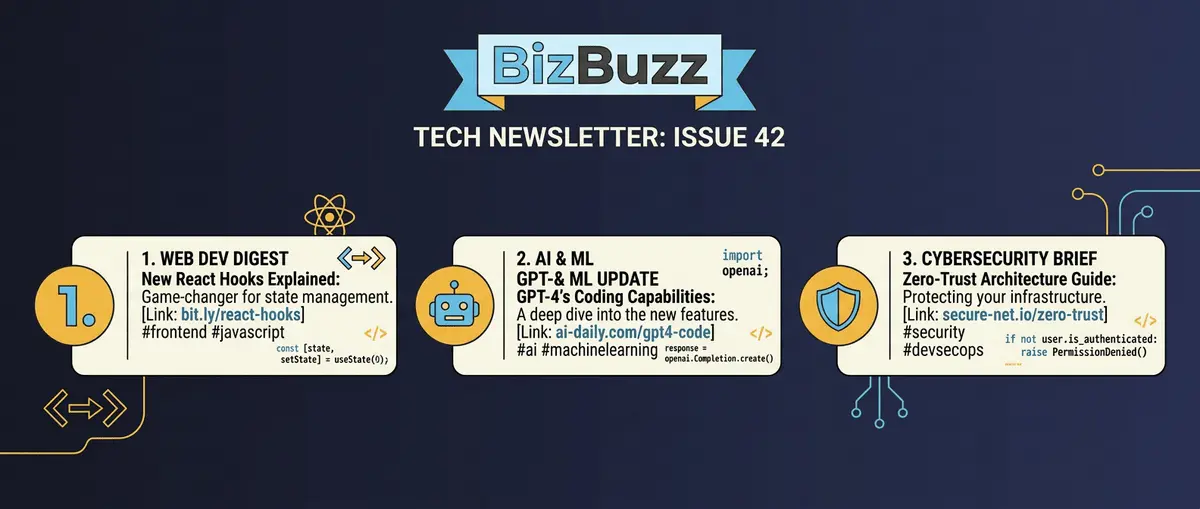
📧 Subject: "3 Things That Changed This Week in [Your Niche]"

1. [Topic] — 2 sentences of context + your take
2. [Topic] — 2 sentences + link to deeper dive
3. [Topic] — 2 sentences + practical recommendation

🔗 Worth reading: 3-4 curated links
💬 What I'm working on: 1 personal note
Short. Opinionated. Useful. Takes 5 minutes to read and positions you as someone who filters the noise.
From Reader to Client: The Conversion Path
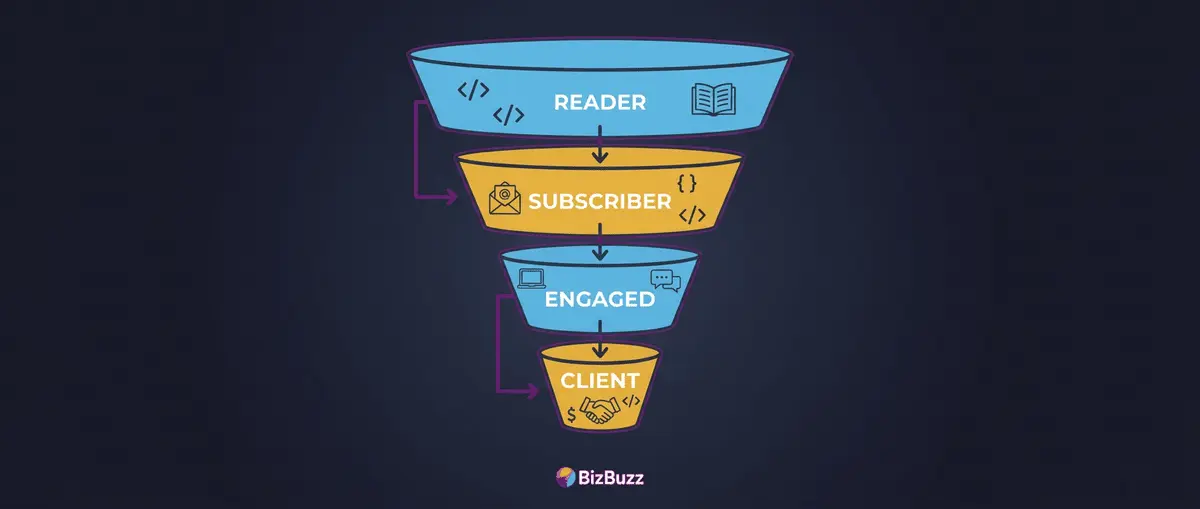
A tech newsletter converts differently than a landing page. The path looks like this:
- Subscribe — they found you through a blog post, conference talk, or social share
- Read consistently — they see your expertise every week for 2-3 months
- Hit a problem — they need help with exactly the thing you write about
- Reply to your newsletter — "Hey, do you consult on this?"
- Close the deal — they already trust you, so there's no sales cycle
This is inbound at its purest. No cold outreach, no proposals, no "let me tell you why I'm qualified." They already know.
The freelancers who run newsletters report that their highest-value clients come from subscribers, not job boards. The trust is pre-built.
The "I've Been Meaning To" Problem
Here's the real talk: you've been meaning to start a newsletter for 6 months.
Maybe a year. You know it would work. You've seen other developers build audiences this way. But between client work, learning new tools, and actually having a life, writing a newsletter from scratch every week feels like another job.
That's the wrong framing. You don't need to write from scratch. You need to:
- Let AI aggregate from the sources you already read (HN, Reddit, Medium, dev.to)
- Add your perspective — the part that's actually you
- Hit send
The curation is the hard part, and it's the part AI handles best. Your voice and opinions are the part only you can provide — and that's what makes subscribers become clients.
The Bottom Line
You're already doing the research. You're already reading the articles. You're already forming opinions about the technology landscape. The only difference between you and the freelancer who has a full pipeline is they hit publish.
Stop meaning to start. Launch your tech newsletter with BizBuzz and turn your daily reading habit into your best lead generation channel.